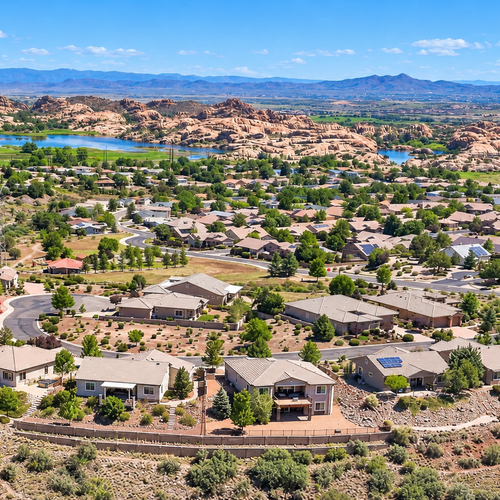


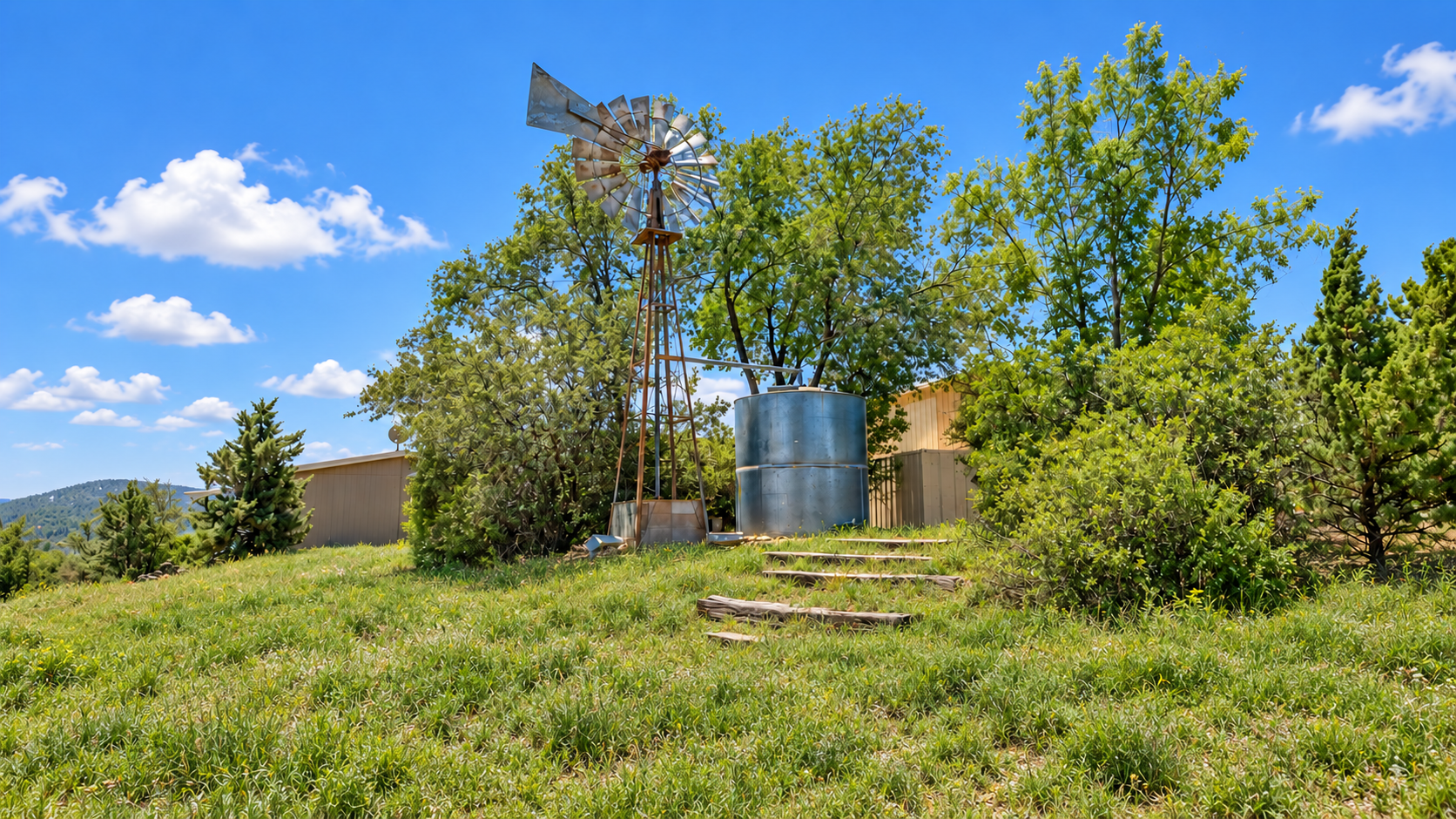
The median home price in Prescott, AZ currently sits around $675,000, and buyers have roughly 440 homes to choose from in the active inventory. What most of those buyers don't realize until they're already deep in a search is that the water source varies dramatically from one property to the next. Understanding this difference is essential when weighing the pros and cons of living in Prescott, AZ.
Homes close to the center of town typically connect to the municipal system. Properties further out, or sitting on larger lots, often rely on private wells. That single difference changes your monthly budget, your inspection list, and what you're signing up to maintain for the life of your ownership.
Quick Answer: City Water vs. Well Water in Prescott
The City of Prescott operates its own municipal water system through its Public Works Department, providing treated water to a large portion of the local population for a monthly fee based on usage.
Private wells work completely independently. They pull groundwater directly from the aquifer beneath the property. No monthly usage bill - but no city crew showing up when something breaks, either. That tradeoff is the whole conversation.
Location usually settles the question before personal preference gets a vote. If you're buying in a dense subdivision inside the city limits, you'll almost certainly be on municipal water. If you're looking at rural acreage, expect a well.
Which System is More Common in Yavapai County
Inside the Prescott city limits and in established subdivisions, municipal connections are the norm. The Water Resource Management and Water Operations divisions handle production and distribution for those areas.
Step outside the city boundaries and the picture flips. Private wells are standard across the rural stretches of Yavapai County, particularly where parcel sizes grow and running municipal lines simply isn't cost-effective.
Comparing the Two Options
City water is straightforward: the municipality handles all testing, treatment, and infrastructure repairs. You turn on the tap and pay the bill.
A private well eliminates the recurring municipal usage charge and puts you in control of your own supply. It also puts you in charge of pump failures, pressure problems, and water quality testing. You're not a customer anymore - you're the utility.
Defining City Water and Private Wells
City water is sourced, treated, and distributed by a local government or utility company. Here, that's the City of Prescott Public Works Department, which manages the infrastructure delivering water to your meter.
A private well is a personal extraction system drilled into the ground on your property. An electric pump pulls groundwater up from the aquifer and pushes it into a pressure tank inside or near the house. Simple in concept, but there are more moving parts than most buyers expect.
What is a City Water Well?
The phrase "city water well" shows up on listings occasionally and tends to confuse people. Usually it means the property sits within city limits but still relies on a private well for its water supply - so, city address, not city water.
In other cases, it refers to a municipal production well. The city itself operates large-scale wells to draw from the local aquifer, which it then treats and distributes through the public system.
Types of Private Wells and How to Check Yours
Modern properties in Yavapai County almost exclusively use drilled wells, created with heavy machinery and capable of reaching hundreds of feet underground. Older or more rural properties might have dug, driven, or bored wells, though those are less common today.
To confirm what a specific home uses, start with the seller's property disclosures or look for a physical well head in the yard. You can also contact the local utility provider to check whether they have an active meter at the address.
The Cost of Water Utilities in Prescott
Whether well water is "cheaper" than city water depends entirely on whether you're counting monthly bills or long-term maintenance. Both answers are technically correct, and neither one tells the whole story.
With a well, there's no per-gallon rate. Ongoing costs are limited to the electricity running the pump and any routine maintenance for the pressure tank or filtration system. With municipal water, you're paying a predictable monthly bill that scales with how much water your household uses - irrigation, daily living, all of it.
Typical Municipal Water Bills
The City of Prescott doesn't publish a single average monthly bill because costs vary too widely based on consumption. Residential usage is billed on a tiered rate structure depending on meter size.
For 2026, a standard 5/8-inch meter carries a monthly meter charge plus an aquifer protection fee. There's also a monthly wastewater service fee of $24.33. Actual water usage is billed per 1,000 gallons on a tiered scale, and all water sales include a combined privilege tax of 9.30%, split between the state and the city.
For construction or hydrant meters, the 2026 rate is $8.33 per 1,000 gallons - up from the $7.00 rate in 2024.
Well Ownership and Maintenance Costs
Skipping the monthly usage bill sounds great until the pump goes. A well pump typically lasts 10 to 15 years, and replacing one can run several thousand dollars depending on the well's depth. That's not a routine line item - it's a surprise expense if you're not budgeting for it.
Well properties also typically rely on septic systems for wastewater, so there's no monthly municipal sewer fee. You will, however, pay for periodic septic pumping and inspections out of pocket.
Safety, Health, and Water Quality
Both public and private systems can deliver clean, safe drinking water. The difference is who's watching.
Is City Water Safe to Drink?
The City of Prescott treats its municipal water to meet binding state and federal guidelines. The public works department continuously tests the supply for contaminants, bacteria, and mineral levels before it reaches your tap, and if anything comes up, the city is required to notify residents and correct the problem. For buyers who'd rather not think about water treatment, that built-in oversight matters.
Testing and Treating Well Water in Arizona
Arizona does not require periodic water-quality testing for private wells. The Arizona Department of Environmental Quality (ADEQ) and the Department of Health Services (ADHS) provide oversight of well water quality guidelines, but they don't actively regulate private wells.
State agencies recommend that well owners test annually for bacteria and nitrates using an ADHS-certified lab. Yavapai County periodically partners with Arizona State University to offer free voluntary well-water testing to residents - worth taking advantage of if you already own or are buying a well property.
Depending on what the results show, you might need water softeners, reverse osmosis systems, or whole-house filtration to address hard water or specific mineral concentrations.
Pros and Cons of a Private Well
Some buyers actively seek out well properties. Others would rather not deal with them at all. Neither position is wrong - it's a question of what you're comfortable managing. With roughly 440 homes currently on the market in Prescott, you have options either way.
Drawbacks of Well Water
The biggest vulnerability is electricity. No power means no pump, which means no water pressure until the lights come back on or a generator picks up the slack. That's a real consideration in areas prone to outages.
You also carry the full financial burden of repairs. A pump failure on a holiday weekend means finding and paying an emergency well technician on your own timeline and your own dime.
Advantages of Managing Your Own Water
No monthly municipal water bill is the obvious upside, and the savings compound over time - especially for households that use significant water for gardening or landscaping.
You're also not subject to city-mandated watering schedules during drought conditions. That doesn't mean ignoring responsible groundwater management, but it does mean more flexibility in how you use what you have.
Switching Between Well and City Water
Finding a house you love that happens to be on a well when you'd prefer city water isn't necessarily a dealbreaker. If municipal infrastructure already reaches the street in front of the property, connecting to the public system is usually possible. The process means paying the city for the connection and hiring a contractor to run the lines from the street to your home.
How to Connect to the Municipal System
The City of Prescott's municipal code outlines the tap and connection fees for new water and sewer service. You'll pay a sewer tap fee and a separate charge for the water meter installation.
For 2026, the city bills water meter installations at the actual cost of the installation plus a percentage markup ranging from 2% to 10%. A private plumber then runs the pipe from the new meter to your house.
Keeping Both Systems Active
Some properties maintain access to both systems - using the municipal connection for indoor drinking and bathing while keeping the private well active for outdoor irrigation. It's a setup worth knowing about if you're buying a property that already has both.
It does require specific plumbing configurations, including backflow preventers. Those devices make sure untreated well water never cross-contaminates the public municipal supply.
Buying a Home with Well Water in Prescott
Purchasing a well property means a few extra steps during escrow. Homes in Prescott currently spend around 54 days on the market, so you generally have enough time to do this right - don't rush it.
Hire a specialized well inspector in addition to your standard home inspector. These are different skill sets, and a general inspector won't always catch what a well specialist will.
What to Inspect Before Closing
A proper well inspection includes a flow or yield test to confirm the pump can deliver enough gallons per minute to support your household. The inspector will also check the pressure tank and electrical components.
Get your own water samples sent to a lab - even if the seller tested recently. Independent results for bacteria, nitrates, and heavy metals are your baseline, not theirs.
Questions to Ask the Seller
Ask for the original well drilling log. It details the total depth of the well and the static water level at the time of installation. Yavapai County Development Services' Environmental Unit reviews new well permit applications for parcels 5 acres or smaller and refers them to the Arizona Department of Water Resources, where these records are often filed.
Also ask for maintenance records. Knowing when the pump was last replaced or when the pressure tank was serviced tells you a lot about what's coming due.
Frequently Asked Questions
Who are the primary utility providers for electricity, water, and gas in Prescott, AZ?
The City of Prescott Public Works Department handles municipal water and sewer services. For electricity and gas, check with local private utility companies to confirm which specific providers service your exact address.
What is the average monthly cost for utilities in a typical Prescott single-family home?
The City of Prescott doesn't publish a single average monthly water bill - costs are based on a tiered rate structure tied to meter size and consumption. As a reference point, homes with a 5/8-inch meter pay a monthly meter charge, an aquifer protection fee, and a $24.33 wastewater fee for 2026, plus the cost of actual water used.
How far in advance of closing should I schedule my Prescott utility transfers?
A few weeks before your closing date is the standard window. That gives the City of Prescott enough time to transition the water meter reading without any interruption in service.
Do all homes in Prescott have access to city water and sewer, or will I need a well and septic system?
Not all homes do. Properties within the established city limits generally connect to the City of Prescott's public water and sewer. Homes in more rural parts of Yavapai County typically rely on private wells and septic systems.
Is trash and recycling pickup included automatically with my City of Prescott utility bill?
Your City of Prescott utility bill covers municipal water usage, meter fees, and the standard wastewater service fee. For trash and recycling, verify directly with the city or your local waste management provider - billing for those services can vary by neighborhood.
Which internet service providers offer the most reliable high-speed coverage in the Prescott area?
Coverage varies significantly depending on whether you're near downtown or in the more rural parts of Yavapai County. Check availability directly with local providers using your specific property address.
Check out this article next