


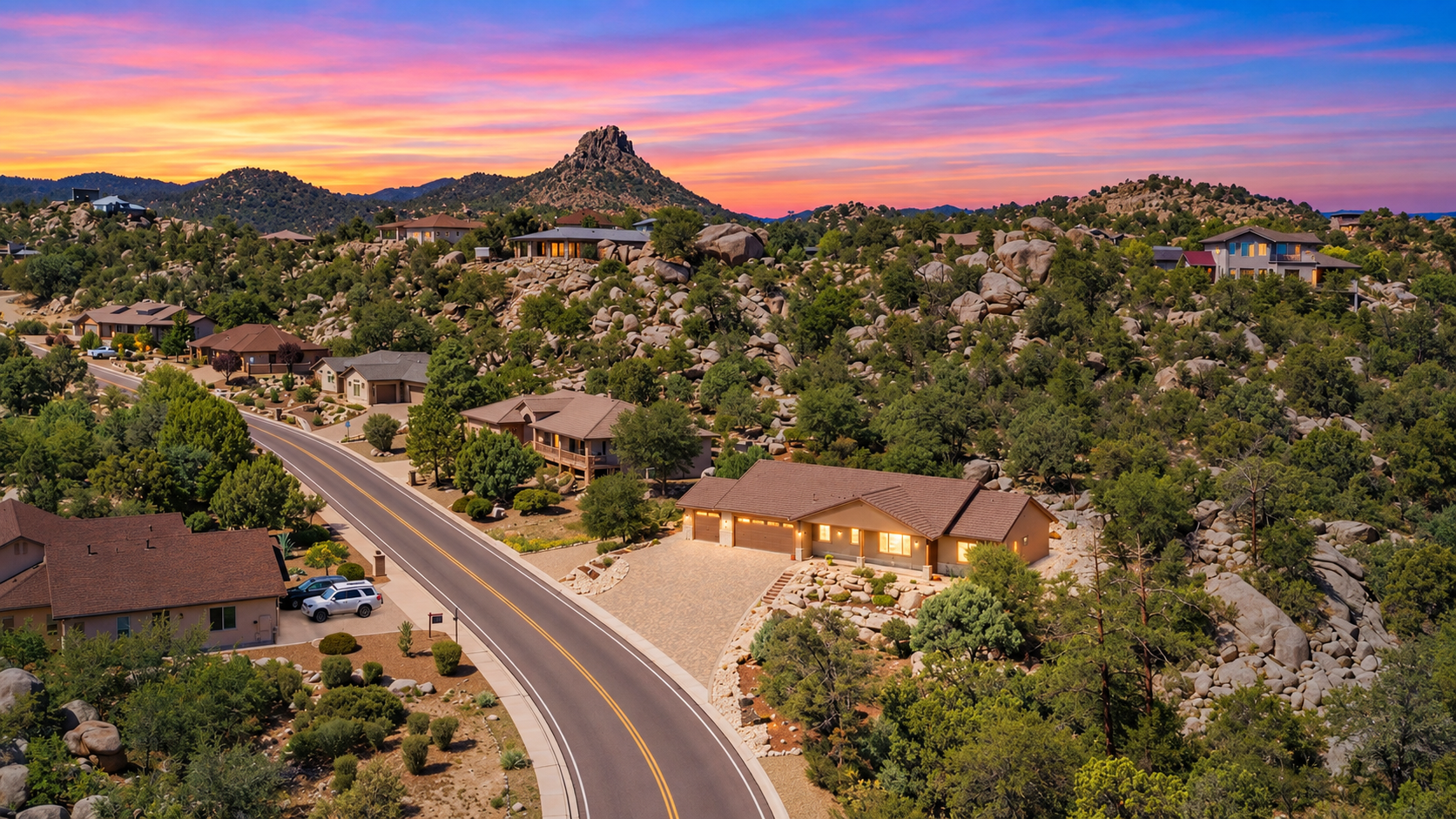
At an elevation of 5,300 feet, Prescott, AZ offers a distinct alternative to the low-desert heat of Phoenix and Tucson. The city currently holds a population of roughly 47,000 to 49,000 residents. This steady growth makes buying a home in Prescott, AZ an attractive option.
Buyers researching living in Prescott, AZ will find a four-season climate paired with a growing local economy. The transition from a small-town retreat to a northern Arizona regional center has reshaped the local real estate market.
The local real estate landscape features everything from historic downtown properties to new construction. Understanding the nuances of this high desert community helps incoming residents make informed decisions.
The Shift to High Desert Life
The climate here differs dramatically from southern Arizona. Summer temperatures bring a dry heat that avoids the extremes seen in the Phoenix metro area.
July and August introduce the monsoon season, delivering sudden afternoon rainstorms that cool the region. Winters bring occasional snowfall, allowing residents to experience all four seasons without the heavy accumulation found in higher mountain towns.
The transition into fall brings cooler temperatures and changing foliage across the surrounding forests. This seasonal variety gives the area a distinct identity compared to other southwestern destinations.
The city appeals to buyers and renters seeking open spaces alongside modern municipal services. This steady growth continues to attract remote workers and retirees looking for a moderate climate.
Everyday Expenses and the Local Economy
The overall cost of living in Prescott, AZ currently sits about 14 to 16 percent higher than the national average. Housing costs drive the majority of this premium, requiring buyers to budget accordingly.
Retirees on fixed incomes should factor local property taxes into their monthly expenses. Yavapai County assesses property taxes based on secondary valuation, which determines the final tax bill for homeowners.
The local job market relies on healthcare, education, and service industries. Major employers include the Yavapai Regional Medical Center, local government offices, and the Prescott Unified School District.
Transportation and utility costs also factor into the overall budget for new arrivals. Electricity bills often spike during the summer months due to air conditioning use, though they remain lower than in the southern desert.
Current Home Prices and Property Styles
As of May 2026, the median home price in the city is $613,000. The average home value hovers near $600,000, reflecting steady demand for single-family homes.
Buyers will find a wide range of housing options across the city. Historic homes sit close to the downtown area, while newer builds and active adult communities dominate neighborhoods like Prescott Lakes.
Incoming residents often face a lack of affordable housing in the entry-level brackets. Buyers looking for lower-priced options should prepare for multiple offers and fast-moving inventory.
Property taxes and homeowners association fees add to the monthly carrying costs. Buyers looking at master-planned communities should review these additional expenses during the inspection period.
Spending Time Outdoors Around Town
Prescott National Forest surrounds the city with over a million acres of public land. Residents have immediate access to outdoor recreation, including miles of trails for mountain biking and hiking.
Watson Lake features the Granite Dells, a series of exposed bedrock formations that border the water. Locals use this area frequently for kayaking, rock climbing, and paddleboarding.
Beyond the natural landscape, the city maintains numerous parks with dedicated courts for pickleball and tennis. Community events center around Courthouse Plaza and Whiskey Row in the historic district.
The Sharlot Hall Museum anchors the western edge of downtown, preserving the region's territorial history. Residents regularly gather in this central corridor for art fairs and weekend markets.
The city also maintains a network of paved multi-use paths connecting different neighborhoods. These trails provide clear routes for cyclists and pedestrians traveling outside the main traffic corridors.
Local Schools and Colleges
The Prescott Unified School District enrolls between 3,900 and 4,000 students for the 2026 school year. The district operates nine campuses spread across the city limits.
School district boundaries dictate which specific elementary or middle school a property feeds into. Buyers interested in specific schools should verify these boundaries before submitting an offer on a home.
Higher education plays a large role in the local economy. Prescott College, Embry-Riddle Aeronautical University, and Yavapai College all maintain campuses within the city.
These colleges provide steady employment and bring regular cultural events to the city. Residents frequently attend public lectures and performances hosted on these local campuses.
Getting Around Town and Regional Travel
The downtown area remains easily walkable, with wide sidewalks connecting shops, restaurants, and municipal buildings. Most residents rely on personal vehicles for daily errands outside the central business district.
Commuting to major metro areas requires a drive down State Route 69 to connect with Interstate 17. The trip to Phoenix and Scottsdale covers roughly 100 miles and takes about an hour and 45 minutes to two hours under normal traffic conditions.
For regional travel, the Prescott Regional Airport offers commercial flights to select western hubs. The Prescott VA also serves as a major destination for veterans traveling from surrounding rural communities.
Public transportation within the city limits remains limited to a few local transit routes. Buyers moving from dense urban centers should plan on owning a vehicle for everyday commuting.
Weighing the Pros and Cons
Every location presents a mix of benefits and drawbacks for incoming residents. Buyers should consider how the local environment aligns with their daily routines.
The advantages of moving here generally center on the climate and natural surroundings.
- Residents experience all four seasons without extreme winter weather.
- The area provides immediate access to public lands and outdoor activities.
- Active community organizations host frequent events around the downtown plaza.
The drawbacks typically relate to the cost of living and geographic constraints.
- Housing prices remain higher than the national average.
- The city offers limited night life compared to larger metro areas.
- Surrounding forests present seasonal wildfire risks during dry months.
Weighing these factors helps buyers determine if the high desert lifestyle matches their long-term goals. The area continues to attract those who prioritize outdoor access and a moderate climate.
Common Questions About the Area
What are winters like in Prescott, AZ?
Winter temperatures frequently drop below freezing overnight, but daytime highs often reach the 50s. The city receives occasional snowstorms, though the snow typically melts within a day or two. Residents rarely need heavy winter gear for extended periods.
Can a single person live comfortably on $100,000 in Prescott, AZ?
An income of $100,000 easily covers the median rent and daily expenses in the current market. Purchasing a home on a single income requires careful budgeting, given the $613,000 median home price. A $100,000 salary provides enough room to manage housing costs while enjoying local amenities.
Why are people moving out of Prescott, AZ?
Rising housing costs represent the most common reason residents relocate to other areas. The lack of affordable housing makes it difficult for some renters to transition into homeownership. Others leave to find broader employment opportunities in larger metro areas like Phoenix.
Check out this article next