


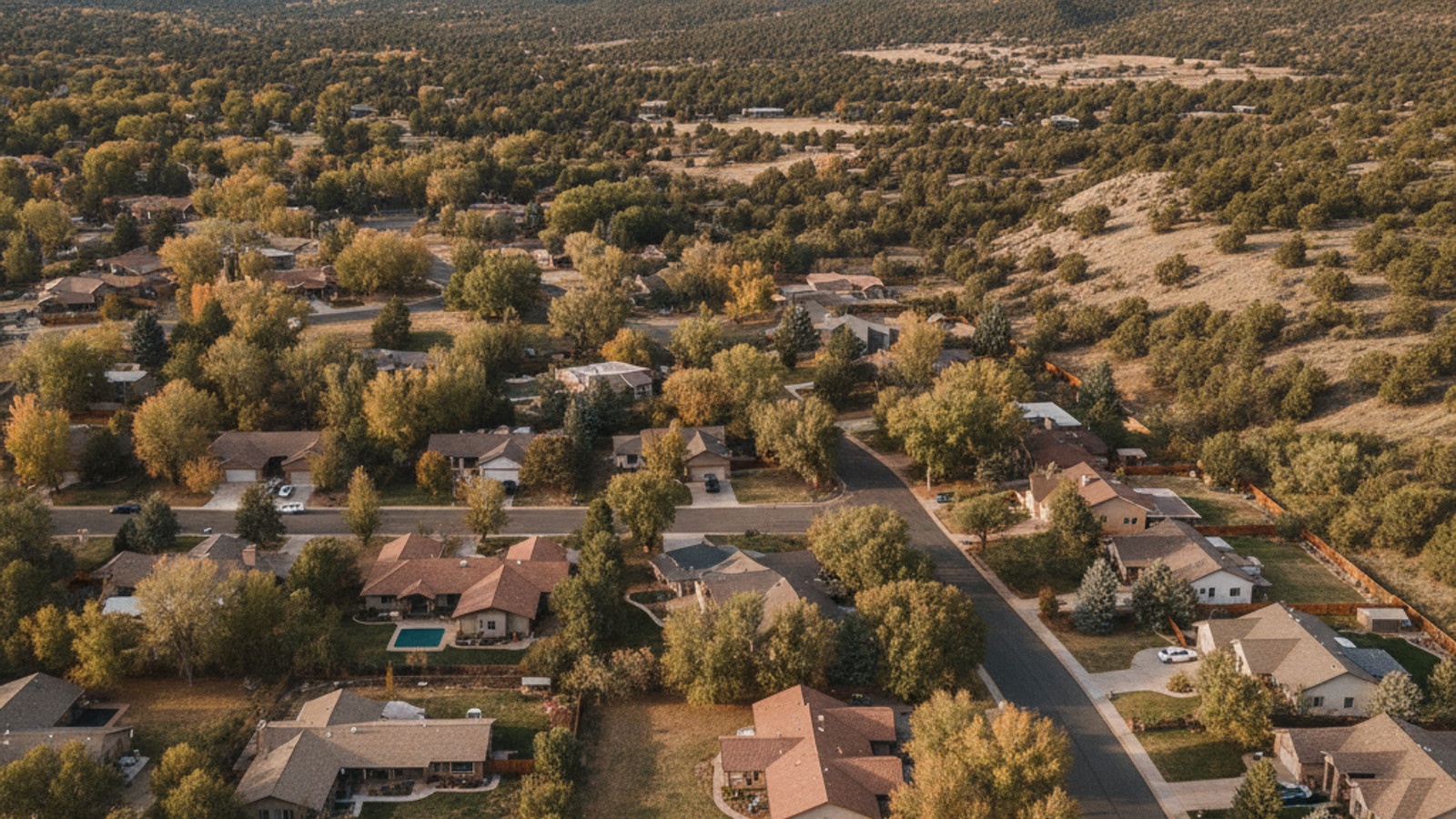
Home prices in the Prescott, AZ housing market have softened from their peak and are holding roughly steady in 2026. For the current median, see our latest monthly Market Update. Buyers entering the area face a different environment than they did just a couple of years ago, as active inventory has grown to create a balanced environment for both sides of the transaction. The days of sight-unseen offers and waived contingencies have largely faded into the past for anyone buying a home in Prescott, AZ.
Available homes have reached about a five-month supply across the Prescott area. This shift gives house hunters more options and negotiating room without causing a severe drop in property values. Sellers are adjusting their expectations as properties take a bit longer to secure a contract compared to the rapid pace of previous years.
Understanding local data helps buyers make informed offers and helps sellers price their listings correctly from day one. Evaluating the latest statistics points to a steady, normalizing period for residential real estate in Yavapai County. Both buyers and sellers benefit from this predictable pace when planning their next move.
Current Home Prices and Inventory Levels
Single-family homes in Prescott currently average around $320 per square foot, depending on the neighborhood and lot size. Prices have held roughly steady over the past year, which represents a stabilization in home prices following the rapid fluctuations seen in previous years.
Active listings have expanded to about a five-month supply of inventory. Data from the Prescott Area Association of REALTORS shows a clear increase in available homes compared to the same period last year. This expanded supply and demand balance means buyers no longer need to waive inspections or offer well over asking price to win a bid.
Homes are currently spending an average of 54 to 59 days on the market before going under contract. Sellers should price their homes based on recent comparable sales to avoid lingering on the market longer than this two-month window. Buyers submitting an offer have the time to review property disclosures and negotiate repairs without the pressure of an immediate bidding war.
Real estate agents are seeing fewer multiple-offer scenarios, which changes how negotiations unfold. A buyer might successfully request seller concessions to help buy down their mortgage interest rate. Sellers who present a well-maintained home still command top dollar, but they should be prepared for standard negotiations.
Property Types Available Across the Area
The local market offers a wide range of single-family homes, which make up the bulk of the available inventory. Standard three-bedroom houses built in the late 1990s and early 2000s form the core of the median price tier. These properties typically sit on quarter-acre or half-acre lots and feature traditional southwestern or ranch-style architecture.
Buyers interested in older architecture often focus on the historic districts near downtown Prescott. These older homes feature distinct craftsman and Victorian designs, and they often command a premium price per square foot due to their proximity to the central plaza. Upkeep and renovation costs play a major role in the overall budget for these historic properties.
New construction continues to expand on the outskirts of the city and into neighboring Prescott Valley, Arizona. Builders are offering modern floor plans with energy-efficient upgrades, often priced between $650,000 and $800,000. Buyers looking at new builds should factor in the cost of landscaping and potential homeowner association fees.
Townhomes and condominiums provide an entry point for buyers with a budget under $450,000. These attached properties are scattered throughout the city, offering lower maintenance requirements for seasonal residents. Buyers should review the monthly association dues to ensure the total payment fits their financial plan.
Outdoor Recreation and Medical Facilities
Watson Lake sits just four miles from downtown, offering residents access to kayaking, fishing, and hiking trails among the granite boulders. Homes located off State Route 89 provide the quickest access to the lake's entrance and surrounding park facilities. The area features a mix of established subdivisions and custom homes built into the rocky landscape.
The Prescott National Forest surrounds the city, providing 1.25 million acres of public land for outdoor activities. Residents living on the western and southern edges of town enjoy direct trail access from their neighborhoods. The forest boundaries limit urban expansion in these directions, which helps maintain the area's natural sightlines.
Healthcare access is a primary consideration for many buyers relocating to the region. Yavapai Regional Medical Center operates its main campus near the center of town, providing emergency services, surgical care, and specialized clinics.
A secondary medical campus operates in Prescott Valley, expanding the healthcare network for the entire region. This secondary facility handles outpatient procedures and provides additional emergency room capacity. Buyers often map the distance from their prospective home to both campuses when evaluating a property's location.
Transportation Routes and Commute Times
State Route 89 and State Route 69 serve as the primary arteries connecting Prescott to surrounding communities. State Route 89 runs north toward Chino Valley and south toward Congress, while State Route 69 handles the bulk of the traffic heading east into Prescott Valley. Buyers should test their commute during peak morning hours to gauge traffic flow along these two main corridors.
Commuting to the Phoenix metro area requires a drive south on Interstate 17, which connects to the local state routes. The drive from Prescott to central Phoenix takes approximately 90 minutes under normal traffic conditions. Weekend traffic can extend this travel time, especially during the summer months when visitors head north to escape the desert heat.
Residents flying out of the state typically use Phoenix Sky Harbor International Airport. The drive to the airport takes roughly 1.5 to 2 hours depending on the time of day and highway construction. Buyers who travel frequently for work should factor this drive time into their relocation decision.
Local public transit is limited, making a personal vehicle a necessity for most residents. The city does not operate a large-scale commuter rail or extensive bus network. Homebuyers should prioritize properties with adequate garage space or driveway parking to accommodate their vehicles.
Local Schools and Yavapai County Property Taxes
The Prescott Unified School District serves the majority of the city's school-aged residents. The district operates multiple elementary schools, two middle schools, and one main high school. Buyers researching education options can verify specific attendance boundaries by checking the district's official zoning maps before making an offer on a house.
Yavapai County assesses property taxes based on a home's limited property value, which is determined annually by the county assessor. The combined tax rate for the 2025-2026 fiscal year sits at 1.9388 per $100 of assessed valuation. This calculation results in an effective property tax rate of roughly 0.37% to 0.48% of a property's market value.
These property tax rates remain relatively low compared to the national average. A buyer purchasing a $600,000 home can expect an annual tax bill between $2,220 and $2,880. Homeowners should review the specific tax history of any property they plan to buy, as special assessment districts can add to the annual total.
Property taxes in Arizona are paid in two installments, with the first half due in October and the second half due in March. Lenders typically roll these payments into an escrow account as part of the monthly mortgage payment. Buyers paying cash for their home will need to manage these biannual payments directly with the county treasurer.
Frequently Asked Questions
Are Prescott home prices dropping in 2026?
Prices have softened from their peak and are holding roughly steady year over year. Prescott has moved into what Geoff Hyland, CEO of The HYLAND GROUP, calls a normal market, about a five-month supply, where well-priced homes sell and overpriced ones sit. Geoff breaks down the latest numbers in our monthly Market Update.
What is the average days on market for a home in Prescott?
Listings in the area currently spend 54 to 59 days on the market before securing a buyer. This timeline gives house hunters a chance to view multiple properties and schedule second showings without rushing. Sellers should prepare for a two-month marketing period when listing their property.
Thinking about selling? Schedule your complimentary market analysis and let’s discuss how to maximize your home’s value in today’s market. Call The HYLAND GROUP at 928-445-2100.
Check out this article next